
As misinformation continues to grow and becomes more difficult to detect, it is extremely important that we develop curriculum to provide students with the skills needed to be adept at recognizing misinformation. Currently, students may have one 30-45 minute class on digital media during the entire school year. The discussion may include mention of misinformation. The class is usually presented by the librarian. The content needs to be expanded. I recommend that students spend at least one period per week (40-45 minutes) learning the skills necessary to be proficient at identifying misinformation.
Some states have implemented digital media curriculum. The article Illinois Is The First State to Have High Schools Teach News Literacy indicated “There’s a widespread misconception that because young people are adept at using digital devices, that they are also skilled at making sense of the information that those devices provide.”
“The Stanford History Education Group (SHEG), found that middle and high school students overwhelmingly failed to demonstrate the skills necessary to distinguish credible sources from unreliable ones.”
According to Bobbie Eisenstock, a journalism professor at California State University “Media literacy is an essential life skill,” “It’s probably more critical now than it ever has been because we live in such a complex digital society. Media technology is reshaping how we learn, play, interact, communicate and how we engage in everyday life.”
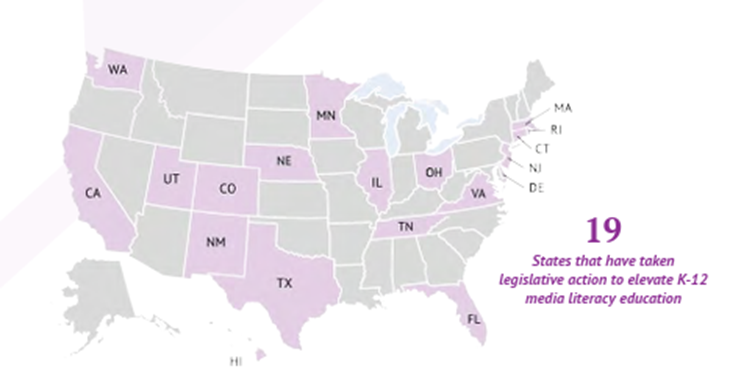
The Media Literacy Policy Report tracks how many states have passed K-12 media literacy legislation. Currently 19 states have passed some legislation requiring schools to provide digital literacy.
“Finland is . . . Europe’s most media literate country.” Finland starts teaching students about misinformation in kindergarten. “Exposing students to the identification of misinformation early in their education appears to be effective. This exposure can be through games.”
I developed a preliminary Digital Media Literacy curriculum for 1st and 2nd graders, specifically designed to help young students identify misinformation in pictures. The curriculum uses a visual and interactive approach, incorporating pictures into the lesson. Young learners engage and learn best through play. Repetition and hands-on activities helps strengthen their skills.
Digital Media Literacy Curriculum for 1st and 2nd graders designed to help young students identify misinformation in pictures
“Picture This! Spot the Real from the Pretend”
Curriculum Goals
By the end of this unit, students will be able to:
- Understand that not all pictures are real.
- Learn how pictures can be changed or edited.
- Ask questions to determine if a picture is real and can be trusted.
- Identify sources (parents, teachers, librarians) who can help them verify the validity of a picture.
Key Concepts
- Real versus Fake Pictures
- Context Clues from Pictures
- Asking “Smart Questions”
- Trusting Reliable Sources (parents, teachers, librarians)
6 Week Lesson Summary
Lesson 1: Every Picture Tells a Story
- Objective: Learn that every picture has a message.
- Activity: Show a picture or photograph to the class
- Discussion: What do you see?
Lesson 2: Can a Picture Lie?
- Objective: Understand that pictures can be misleading.
- Activity: Show an edited photo such as a dog with wings.
- Discussion: Is this real? Why or why not?
Lesson 3: Spot the Difference
- Objective: Identify fake images.
- Activity: Match pictures of real and fake animals such as a dog with two heads
- Discussion: How are the pictures different?
Lesson 4: Detective Questions
- Objective: Teach 3 questions to ask:
- Who made this picture?
- Why was it made?
- Can I check if it’s true?
- Activity: Use a checklist to analyze pictures. (see Sample Picture Detective Checklist below)
- Discussion: Why was the picture made?
Lesson 5: Whose Picture Can I Trust?
- Objective: Introduce trusted sources (teachers, library books, parents).
- Activity: Sort pictures by source (family versus “YouTube and TikTok”)
- Discussion: How can you trust a picture? Who can you ask?
Lesson 6: Fix the Picture
- Objective: Analyze the context to determine if the picture is real.
- Activity: Show zoomed-in or cropped images and students will guess what it is. Then show the students the entire picture.
- Discussion: How did you feel seeing only some of the picture?
Tips
- Emphasize curiosity. Children are detectives.
- Use your imagination to keep students engaged.
Picture Detective Checklist
You are a Picture Detective!
Let’s find out if a picture is REAL or PRETEND!
Look at the picture. Then answer ✅ YES / ❌ NO to each question:
Who showed me this picture?
A teacher? ✅ YES / ❌ NO
A parent? ✅ YES / ❌ NO
A phone, tablet, or computer? ✅ YES / ❌ NO
Does the picture look real? Is there anything strange or impossible?
Flying animal? ✅ YES / ❌ NO
Giant food? ✅ YES / ❌ NO
Dog with glasses? ✅ YES / ❌ NO
Can I ask someone I trust about it?
Teacher? ✅ YES / ❌ NO
Mom, Dad, or Grandma? ✅ YES / ❌ NO
Book or website? ✅ YES / ❌ NO
Does everything in the picture make sense? (Look for clues!)
Do the colors look right? ✅ YES / ❌ NO
Do the shapes look right? ✅ YES / ❌ NO
Do the people look right? ✅ YES / ❌ NO
Do the animals look right? ✅ YES / ❌ NO
Remember: If you are not sure, it is ok to ask an adult you trust!
These questions can be printed on a worksheet or the student can complete the Picture Detective Checklist online.
Now, let’s look at some pictures. Let’s see if you can identify the real versus fake pictures!

Which picture is real? Which picture is fake?
Are both pictures real? Are both pictures fake?

Which picture is real? Which picture is fake?
Are both pictures real? Are both pictures fake?

Which picture is real? Which picture is fake?
Are both pictures real? Are both pictures fake?

Which picture is real? Which picture is fake?
Are both pictures real? Are both pictures fake?
Let’s look at some dogs!
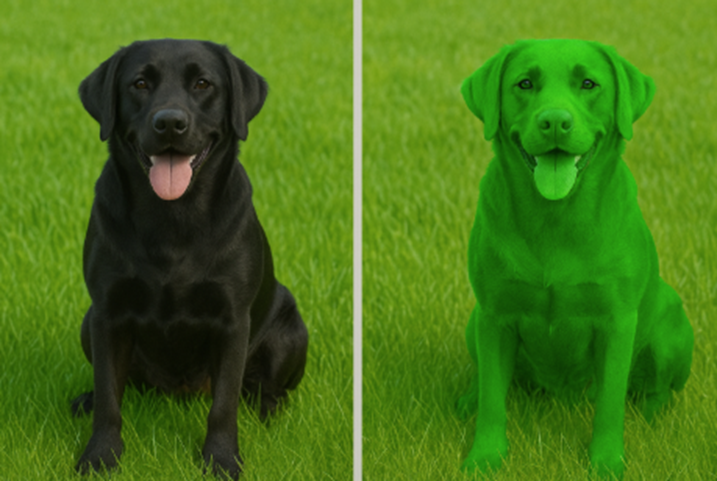
Which picture is real? Which picture is fake?
Are both pictures real? Are both pictures fake?
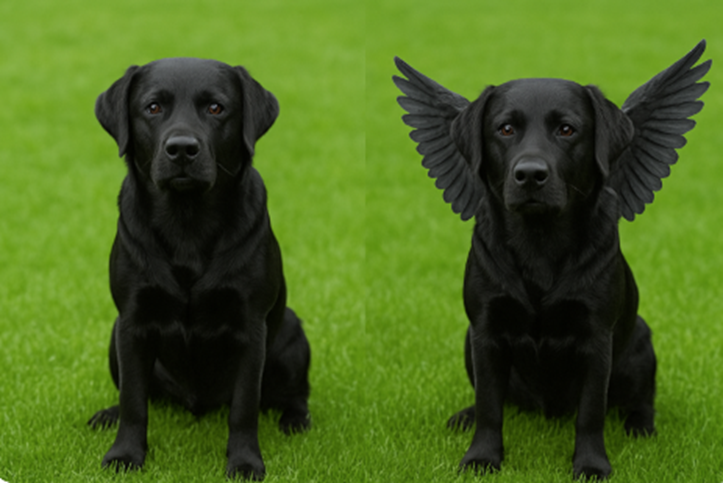
Which picture is real? Which picture is fake?
Are both pictures real? Are both pictures fake?
Do dogs have wings? Can dogs fly?

Is this picture real? Do dogs have 2 heads?
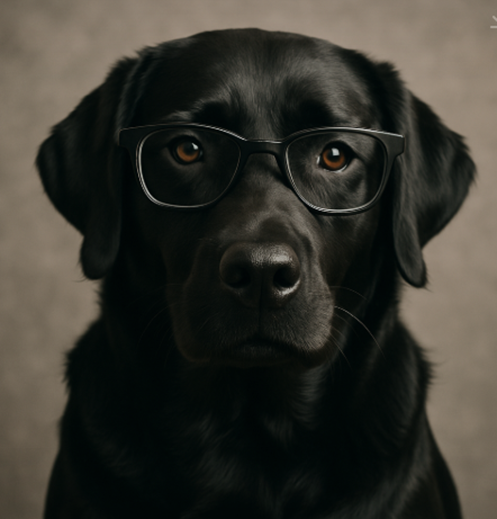
Is this picture real? Do dogs wear glasses?
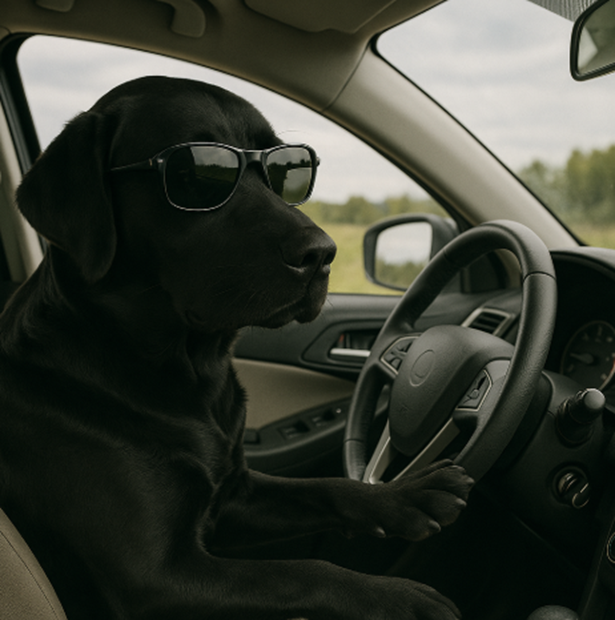
Is this picture real? Can dogs drive cars?

Is this picture real? Do dogs use forks and spoons to eat?
I think that using a visual and interactive approach will be effective in helping young students learn how to develop the necessary skills to identify misinformation. Games keep students engaged and help students learn while having fun. By starting at a young age, students will learn through repetition how to identify misinformation.
References
Claybourn, Cole. What Is Media Literacy? What Parents Need to Know. US News & World Report November 14, 2023. https://www.usnews.com/education/k12/articles/what-is-media-literacy-what-parents-need-to-know
France-Presse, Agence. Finnish youth taught how to spot disinformation. VOA News December 24, 2024. https://www.voanews.com/a/finnish-youth-taught-how-to-spot-disinformation-/7912218.html
Kivinen, Kari. In Finland, We Make Each Schoolchild a Scientist. Issues in Science and Technology. Vol. XXXIX, No. 3, Spring 2023. https://issues.org/finland-education-misinformation-social-resilience-kivinen/
Media Literacy Policy Report. Media Literacy now. https://medialiteracynow.org/policyreport/
Medlin, Peter. Illinois Is The First State to Have High Schools Teach News Literacy. NPR August 12, 2021. https://www.npr.org/2021/08/12/1026993142/illinois-is-the-first-state-to-have-high-schools-teach-news-literacy
Spector, Carrie. As the 2020 election approaches, Stanford scholars teach skills to judge fact from fiction online. Standord Graduate School of Education. October 8, 2020. https://ed.stanford.edu/news/2020-election-approaches-stanford-scholars-teach-skills-judge-fact-fiction-online
Wineburg, Sam, Joel Breakstone, Nadav Ziv, & Mark Smith. Educating for Misunderstanding: How Approaches to Teaching Digital Literacy Make Students Susceptible to Scammers, Rogues, Bad Actors, and Hate Mongers. Working Paper A-21322, Stanford History Education Group, Stanford University, Stanford, CA, 2020. https://purl.stanford.edu/mf412bt5333