
What is misinformation?
According to the American Psychological Association “misinformation is false or inaccurate information.” Wikipedia expands the definition by including the words “incomplete or misleading.” Misinformation usually does not have malicious intent and is not deliberately deceptive. Often, the people who spread misinformation do not realize that the information was not true.
Is misinformation dangerous?
Misinformation can be dangerous. For instance, some parents believe that vaccines are dangerous. False articles about vaccines causing autism were posted on social media and spread rapidly. Parents refused to vaccinate their children. The facts were reviewed. It was determined that the tests were flawed and the theory was removed; however, parents still believe what was falsely published over 25 years ago and refuse to vaccinate their children. Measles (MMR) was almost eradicated in the United States; however, since January 2025, the Texas Department of State Health Services reported that there are currently over 600 cases of measles reported in Texas this year (2025).
Columbia University’s Mailman School of Public Health article “Vaccine Misinformation Outpaces Efforts to Counter It” found that people are more likely to believe misinformation due to the “high volume of misinformation appearing online” which can “override more reliable sources” and “banning misinformation on social media can backfire” due to people using “less moderated sources of information.”
What are social media platforms such as Instagram and TikTok doing to prevent the spread of misinformation?
Instagram’s Approach to Reduce Misinformation
Instagram has implemented measures to reduce misinformation.
These include:
Third-Party Fact-Checking, Image Matching Technology, and Reducing Visibility.
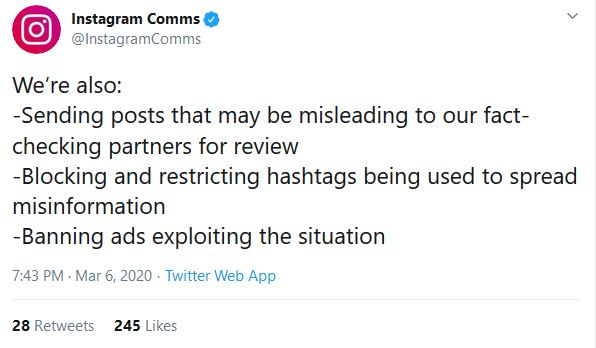
Third-Party Checking: Instagram has partnered with third-party organizations including PolitiFact and Reuters, both reputable companies, to review the accuracy of content posted on Instagram. If a post is found to be inaccurate (misinformation), then Instagram flags the post and it is hidden behind a warning screen. Instagram users are then given the option to see why it was flagged. In addition, Instagram removes the post from “Explore” and hashtags. This “reduces its visibility in Feed and Stories.”
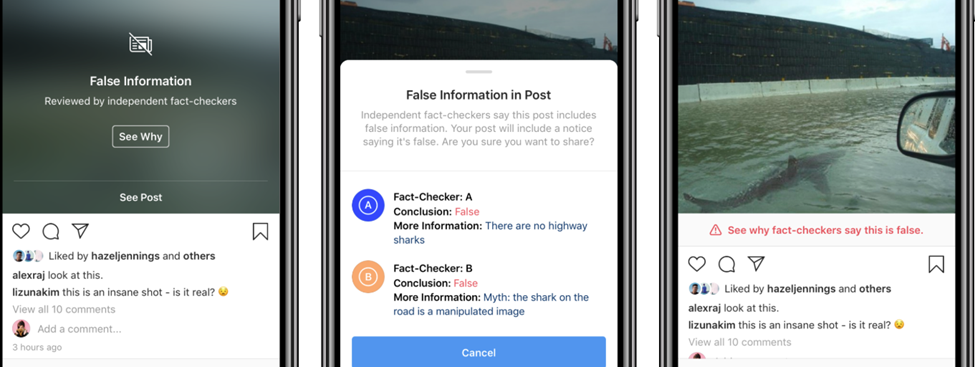
Image Matching Technology: Instagram uses technology to determine if a post is false or if the same content has been posted previously. When found, Instagram removes the post from “Explore” and hashtags. This “reduces its visibility in Feed and Stories.”
Reducing Visibility: As mentioned previously, when Instagram flags a post as incorrect or false, it reduces the post visibility by removing the post from “Explore” and hashtags.
Personally, I have not seen many posts that have been labeled as misinformation; however, my exposure is limited to the people I follow.
TikTok’s Approach to Reduce Misinformation
Like Instagram, TikTok, has implemented measures to reduce misinformation.
These include:
Consultations with outside experts, removing accounts, automated AI technology and user reports, and labeling posts as unverified.
Consultations with outside experts: TikTok regularly reviews videos and posts and has consultations with experts including a global Safety Advisory Council as well as third-party fact checkers to review issues of misinformation. If a video is identified as false, the post may be labeled with a warning and restricted from appearing in a feed.
Removing accounts: If TikTok determines that an account posts inaccurate and harmful information which violates TikTok’s community guidelines, Tik Tok removes the account.
Automated AI technology: TikTok uses automated AI technology, algorithms, and user reports to regularly review posts. If a video is identified as false, the post is removed.
Labeling posts as unverified: If TikTok is unable to verify the validity of a video, TikTok labels the post with a warning indicating that the post is unverified.
Misinformation Monitoring Success
Both Instagram and TikTok are working hard to reduce misinformation. Both social media platforms use technology to help verify the accuracy of users’ posts. Both platforms label posts with warnings and reduce visibility of the posts. Both platforms use third-party fact checkers to help identify misinformation. TikTok actually removes accounts that have been found to violate TikTok’s Community Principles which protect freedom of expression; however, limit harmful content.
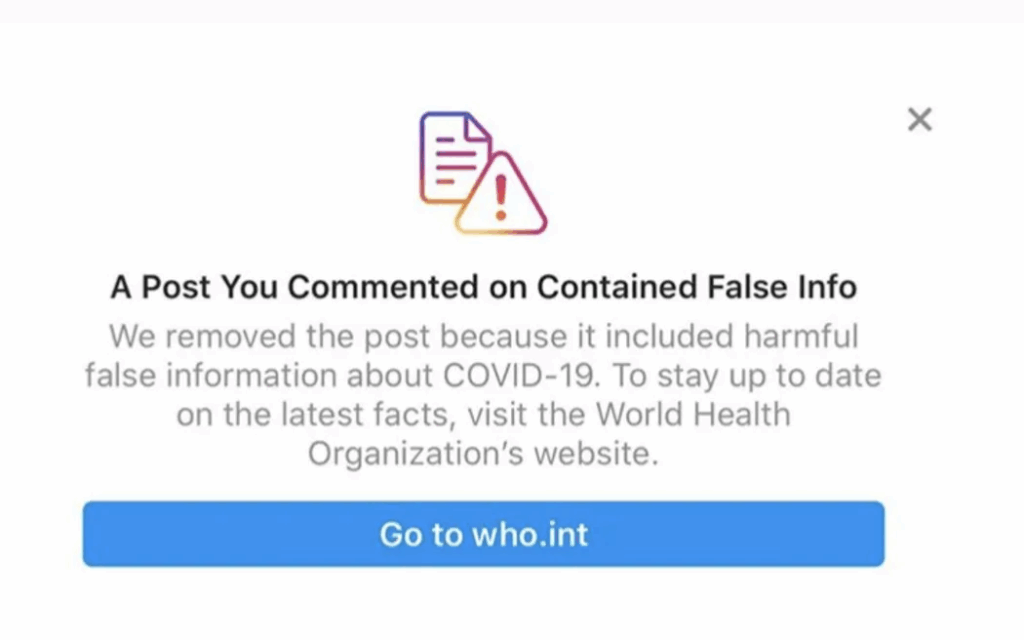
While both Instagram and TikTok have reduced the amount of misinformation posted on their platforms, many times the posts are removed after the post has gone viral and caused damage. Another issue is that users do not receive notifications or explanations as to why their posts are removed. By not providing explanations, the users continue to repost misinformation which can cause harm.
Recommendations for Improvement
TikTok removes accounts that violate their Community Principles. Instagram should also consider removing accounts that publish misinformation.
Both Instagram and TikTok should provide information about the algorithms used to identify misinformation.
Users whose posts have been flagged should be provided information as to why their posts have been flagged.
Conclusion
Both Instagram and TikTok are attempting to reduce misinformation that is posted on their social media platforms. Identifying misinformation can be challenging. Unfortunately, misinformation spreads fast and can be very dangerous. I believe it is important for users to verify all information to ensure that it is accurate. We will never eliminate misinformation, but we can attempt to reduce and control it.