
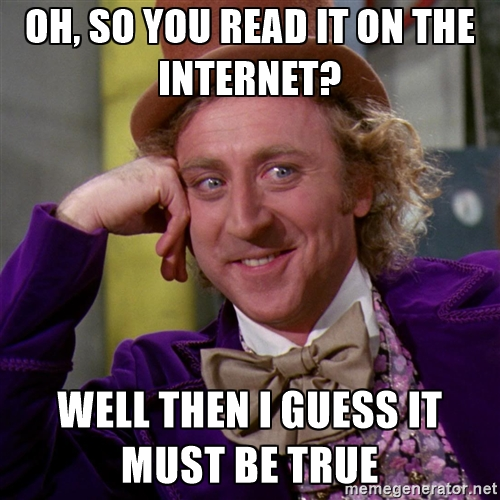
Misinformation continues to grow at alarming rates. Misinformation is defined as false or inaccurate information. Misinformation can be very convincing and is designed to solicit our emotions including fear and anger and “especially when it speaks to our own existing biases, experiences, and views.” (Canadian Red Cross) Once read, people tend to share the information, and the misinformation is spread rapidly. Misinformation can be dangerous. During COVID-19 pandemic, people posted about miracle cures such as gargling with bleach. This misinformation was untrue and had devastating events.
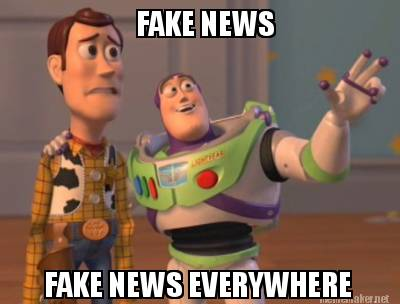
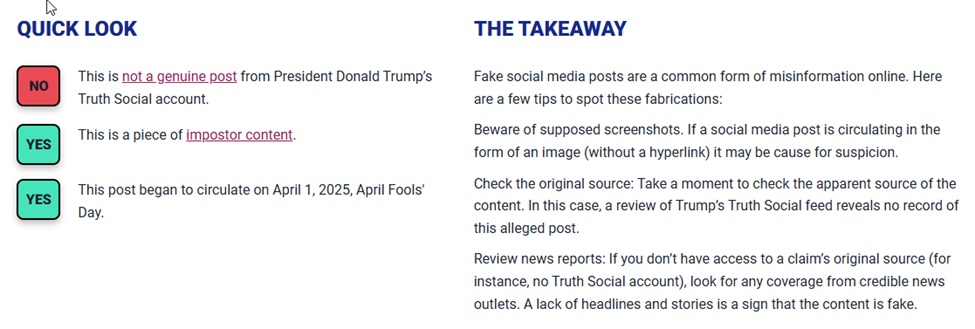
RumorGuard is part of News Literacy Project (NLP) and was developed to help people learn about recognizing misinformation. According to RumorGuard, five factors should be reviewed when evaluating misinformation. These include authenticity, source, evidence, context, and reasoning. In addition, the website highlighted seven Standards of Quality Journalism.The standards include multiple credible sources, avoidance of bias, documentation, verification, balance, context, and fairness.
RumorGuard posted different examples including a post about President Trump ending dual citizenship. By applying the different evaluation factors, the website helps readers identify misinformation.
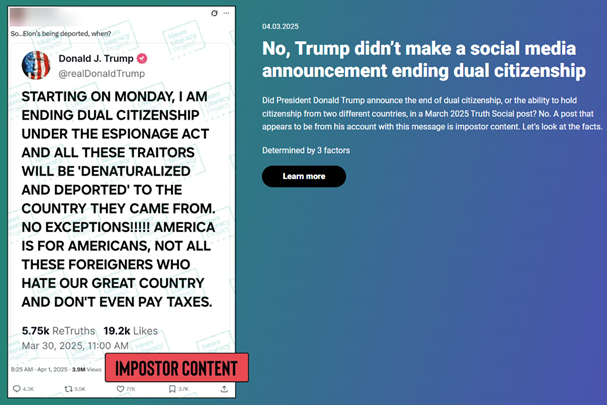

The post indicated a current date of April 1, 2025 with statistics showing that the post had almost 20,000 likes from the original post on March 30, 2025 and within 2 days had over 75,000 likes.
When a person sees a large number of likes, it helps the reader believe that the post is true.
The website then provides detailed information about recognizing how the post is misinformation. MisInfoM
RumorGuard also offers mini interactive lessons on numerous topics recognizing misinformation. Below is an example of a mini lesson on weather.
MisInfoQuest – Weather (lesson)
10 screens
Reminder about type of misinformation: Satire, False Context, Imposter Content, Manipulated Content, Fabricated Content
Instructions – type of misinformation
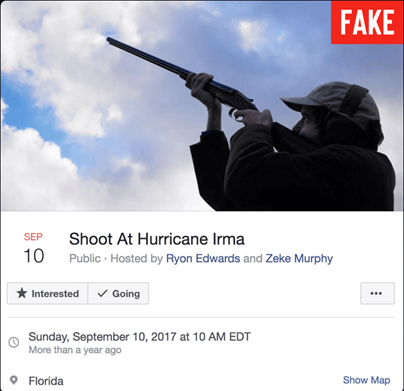
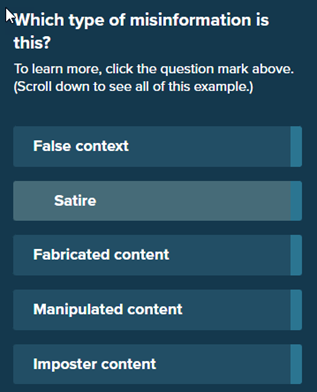
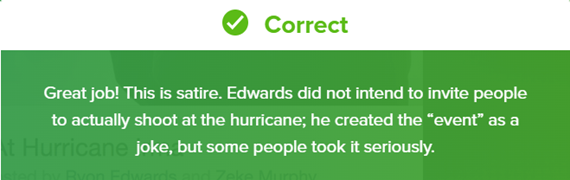
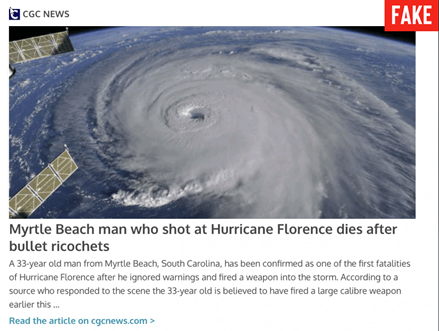
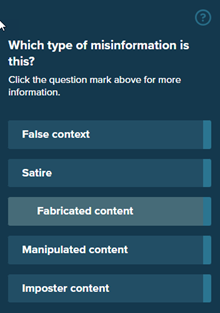
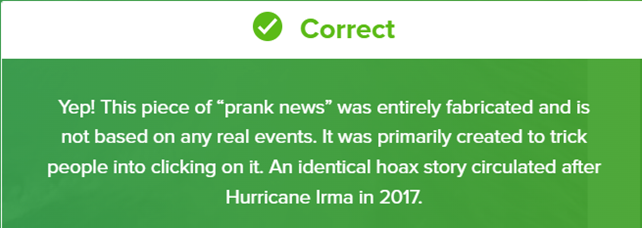
RumorGuard’s website is very engaging. The website presents many examples and opportunities to learn about misinformation. The examples are current and relevant. The examples provided could be easily believed to be accurate. The website was interactive which helps keep the user’s attention.
RumorGuard is an effective educational tool to use to teach readers about misinformation by developing analytical skills.
Another option to use to learn about misinformation is Bad News. Bad News is an interactive website that has the user pose as a person posting misinformation. The user interacts with the “computer” and attempts to build as many followers as possible. Bad News uses the imposter syndrome.
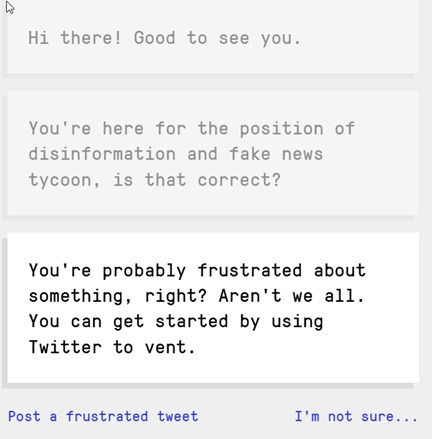
The website starts a conversation with the user. The user gets 2 choices for each question.
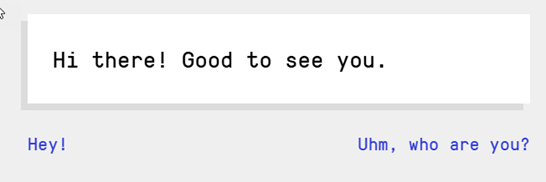
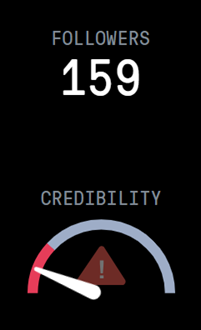
As the user interacts with the “instructor,” and makes choices, the number of followers increases.
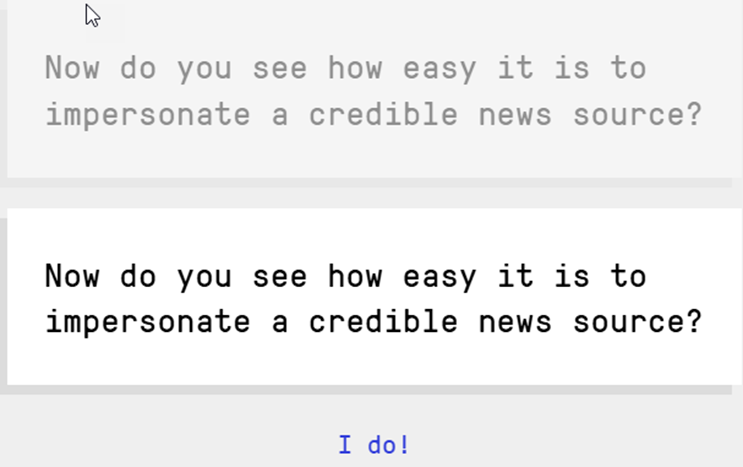
And then the user gets rewarded!
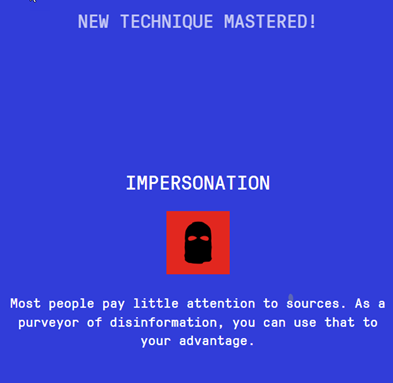
While Bad News does not provide detailed analysis skills for the user, it offers interactive activities demonstrating how easy it is to spread misinformation. Bad News is an effective tool for learning about misinformation since it involves the reader.
Both RumorGuard and Bad News are great tools for identifying misinformation. While it is difficult to stop the use of misinformation, empowering readers to identify and ignore misinformation is very important.
References
American Psychological Association https://www.apa.org/topics/journalism-facts/misinformation-disinformation
Canadian Red Cross Blog https://www.redcross.ca/blog/2023/5/why-misinformation-is-dangerous-especially-during-disasters
Fake News and Alternative Facts: Finding Accurate News: Why is Fake News Harmful? ACC Library Services https://researchguides.austincc.edu/c.php?g=612891&p=4258046
Ferreira, Gabby “Ask and Expert: What Makes Online Misinformation So Dangerous – And Shareable?” Cal Poly, College of Libert Arts. https://cla.calpoly.edu/news/2020/kim-bisheff-safety
“Managing Misinformation” Harvard University. https://www.harvard.edu/in-focus/managing-misinformation/
Nelson, Taylor, Nicole Kagan, Claire Critchlow, Alan Hillard, and Albert Hsu, “The Danger of Misinformation in the COVID-19 Crisis” PMC PubMed Central-NIH National Library of Medicine. Nov-Dec 2020; 117 (6): 510-512. https://pmc.ncbi.nlm.nih.gov/articles/PMC7721433/